Utility companies that provide essential services to households and businesses, such as electricity, gas, and water, as well as construction sites involved in the development of transport infrastructure, often have to deal with crises and emergencies linked to the critical nature of these infrastructures. For monitoring and controlling these assets, the use of drones for field inspections can provide valuable support in protecting infrastructure and maintaining operational efficiency and continuity.
To meet these needs, drone inspections are being increasingly adopted in the energy industry, to the point that drone-based solutions are gradually replacing traditional inspection methods. This trend is highlighted by the market research companyMarket Research Future (MRFR), which forecasts a global compound annual growth rate (CAGR) of 15.1% for the sector over the 2025–2035 period. In Italy, according to the Drone Observatory of the Polytechnic University of Milan, the professional drone market experienced a boom between 2013 and 2017, when most of the companies currently operating in the sector were established. In 2014, ENAC (the Italian Civil Aviation Authority) issued the first regulations for professional drone operators covering both critical and non-critical operational scenarios.

Takeaways
-
Why drone inspections are increasingly adopted by utilities and major infrastructure construction sites
-
Which risks threaten the operational continuity of energy and water networks
-
How drones improve response times, personnel safety, and blackout reduction
-
For which facilities and scenarios drone inspections are most effective and cost-efficient
Drone inspections: why they are useful
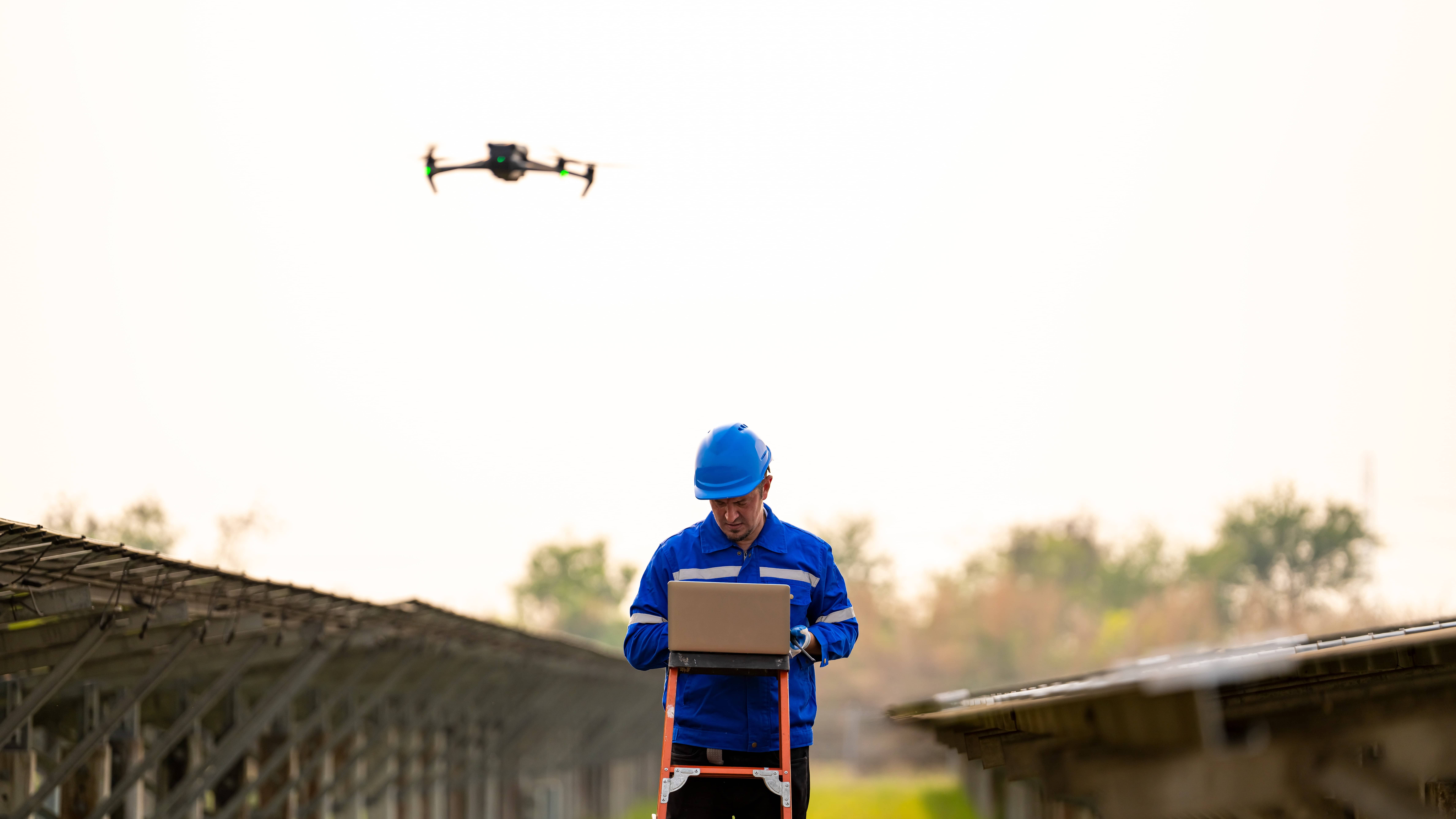
Drone inspections make it possible to monitor and inspect in real time those areas of infrastructure affected by attacks, failures, or emergency situations. Drones provide an immediate and detailed overview of the situation, enabling rapid and targeted decision-making to prevent or mitigate damage and restore essential services.
When delivering essential services, the primary objective is to guarantee service continuity and maintain supply as much as possible even under adverse conditions, minimizing the impact on users. A prolonged power outage, in fact, can paralyze hospitals, transportation systems, communications, and economic activities, while causing serious disruption to villages and urban centers.
Energy infrastructure: better protection through high-quality data
Energy and water networks are vulnerable to physical damage, and the challenge is to protect their security effectively while keeping them in optimal operating condition.
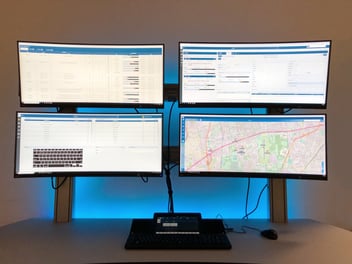
In crisis situations, data management capabilities are vital, specifically, the ability to collect, analyze, and distribute accurate information in real time. A lack of high-quality information and poor coordination between the control room and field intervention teams can generate inefficiencies and delays in response procedures.
Speed of action is essential because, when intervention teams can quickly identify the critical issue, they are able to implement the necessary corrective measures immediately and restore service in the shortest possible time.
Mitigating damage and its consequences through drone inspections
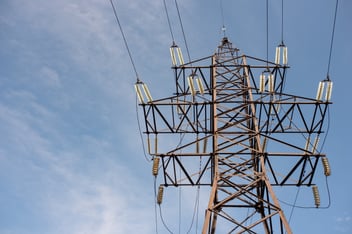
Those responsible for monitoring energy facilities and critical infrastructure in general must assess the factors that can cause damage to various assets, whether energy-related (power pylons, photovoltaic systems, pipelines, aqueducts, etc.) or transport-related (road or railway construction sites, bridges, airports, etc.). Drone inspections help mitigate the impact of these risks by enabling faster identification and assessment.
The main risk factors include:
-
Extreme natural events
Fires, floods, earthquakes, landslides, and severe weather phenomena can cause structural damage of varying severity to energy infrastructure, while also hindering direct access by technicians. -
Aging infrastructure
The natural deterioration of materials requires appropriate preventive and predictive maintenance programs. Without constant monitoring, minor defects can evolve into critical failures. -
Design flaws
Errors during the design or installation phases can lead to failures that interrupt service delivery and require complex restoration interventions. -
Cyberattacks
Attacks targeting industrial control systems can compromise the normal operation of facilities or disable safety systems, causing malfunctions that may result in direct physical damage. -
Physical intrusions and theft at construction sites
Intrusions into infrastructure and construction sites, often aimed at stealing materials, can cause damage, physical security breaches, and possible service disruptions.
The risks of ineffective intervention management
In various crisis scenarios, drone inspections help asset monitoring managers reduce the impact of damage and failures affecting infrastructure, improving the effectiveness of response operations.
The consequences of ineffective management of emergencies and crises involving energy facilities or transport infrastructure can be wide-ranging. For example, organizations may suffer significant financial losses in the event of prolonged service interruptions and face increased operational costs related to service restoration, which often requires emergency interventions. In addition, they may experience reputational and image damage caused by a loss of trust among consumers and business users, as well as potential sanctions from the relevant authorities, which may meanwhile have launched investigations into how the crisis was managed.

Drone inspections: who benefits most
Monitoring energy infrastructure and transport infrastructure construction sites through drone inspections is particularly advisable and cost-effective when the areas to be covered and monitored are very large. This includes construction sites and infrastructure spread across many kilometers, such as large photovoltaic parks or railway construction sites, which drones can survey and inspect in just a few hours. This represents a significant advantage compared to the days required for costly ground inspections carried out by technical personnel, as well as the considerably higher operational costs associated with the use of helicopters or other types of aircraft.
Faster response times and greater personnel safety
Drone inspections enable real-time monitoring of critical points within facilities, rapidly and accurately mapping potential threats and accelerating the resolution of emergencies and crises. Even in alarm situations, the use of drones significantly reduces response times and helps operators quickly gather information about what is actually happening. The control room therefore gains full situational awareness and can take the most appropriate actions to manage and resolve the crisis. This results in shorter emergency durations and, consequently, significant cost savings for the organization, while improving the efficiency and operational continuity of its infrastructure.
Drone inspections also greatly reduce risks for human operators, who in traditional inspections may be forced to endanger their safety when attempting to access hazardous, elevated, or difficult-to-reach areas such as wind turbines, high-voltage power lines, damaged structures, or flooded zones. Drones eliminate this risk by flying close to critical areas with agility, capturing photos and videos that, once analyzed, make it possible to assess the situation and deploy personnel only where and when it is safe to operate.
Greater situational awareness through drone inspections
Another advantage of drone inspections is the enhanced situational awareness enabled by the data, images, and videos collected, which provide a comprehensive and real-time overview of where threats and damage are located, how extensive they are, and which infrastructure assets have been affected. Improved situational awareness represents a true strategic asset: a major leap forward compared to the fragmented and delayed overview of infrastructure conditions obtained by sending an inspection team on site to assess damage and then relay the information.
In addition, the data acquired by drones can be immediately shared with control centers and all involved personnel, ensuring everyone operates with the same level of information and reducing misunderstandings. Data and insights are used to guide field intervention teams, improving coordination among crisis management teams and enabling a more effective and targeted response. Furthermore, having real-time data on how the situation is evolving makes it possible to redirect resources or activate emergency plans proactively rather than merely reactively.